

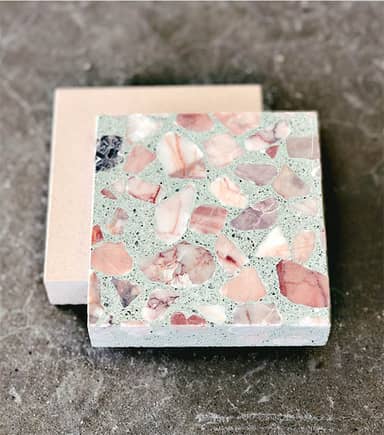


Pricing Your Leftover Materials
Setting the right price is the difference between a quick sale and a listing that sits for months. Price too high, no one bites. Price too low, you leave money on the table. This framework helps you find the right number.
How It Works
Resale pricing for construction materials follows a consistent logic: start with the retail price, discount for condition and circumstances, then adjust for category-specific factors.
The four-step framework below works for any material category. Category-specific guidance is provided in the sections that follow.
The Pricing Framework
Step 1: Find the Compare Price
What does this product cost new from an authorized retailer right now? This is your anchor.
Where to look:
- Manufacturer's website (MSRP)
- Authorized dealer quotes
- Build.com, Ferguson, etc. for fixtures
- For discontinued items: last known retail or closest current equivalent
If you can't find an exact match, use the closest comparable product. Note the comparison in your listing for credibility.
Step 2: Apply Condition Discount
| Condition | Description | Discount from Retail |
|---|---|---|
| New in box | Sealed original packaging | 30-40% off |
| Open box | Opened, inspected, never used | 35-45% off |
| Like new | Briefly installed, no wear | 40-50% off |
| Good | Used, minor cosmetic wear | 50-60% off |
| Fair | Visible wear, fully functional | 60-75% off |
Step 3: Adjust for Specifics
After the condition discount, adjust up or down for these factors:
Adjust UP (+5-15%):
- High-demand brand with limited availability
- Complete set (matching lot, includes accessories)
- Large quantity (bulk attracts contractors)
- Current production (not discontinued)
Adjust DOWN (-5-15%):
- Discontinued / hard to match
- Odd quantity (not enough for typical project)
- Missing accessories or components
- Location with limited local buyer pool
Step 4: Consider Your Timeline
How quickly do you need to sell?
- Patient (2-3 months): Price at the top of your range. Wait for the right buyer.
- Moderate (2-4 weeks): Price in the middle. Good balance of speed and return.
- Urgent (this week): Price at the bottom of your range or slightly below. Speed over margin.
Remember: unsold materials in storage have carrying costs (space, risk of damage, depreciating value). Sometimes a quick sale at a lower price beats a higher price in 6 months.
Category-Specific Pricing Tips
Tile
- Always price per square foot AND total lot price
- Single lot commands 10-15% premium over mixed lots
- Matching trim adds 10-20% to the package value
- Designer tile (Ann Sacks, Heath) holds value better than commodity tile
Windows
- Brand tier is the biggest value driver (premium vs. builder-grade)
- Matching sets from one project sell faster than singles
- Standard sizes have more buyers than custom
- New/unused vs. previously installed is a 40-60% value difference
Lighting
- Original packaging and all accessories dramatically impact value
- Designer brands (Visual Comfort, Hudson Valley) have strong resale markets
- Current vs. discontinued affects buyer confidence
- Complete fixtures > parts or shades alone
Kitchen & Bath
- Model numbers are critical — buyers need exact product identification
- Missing parts (handles, drain assemblies) can tank value
- Plumbing compatibility matters (check valve sizes, connection types)
- Premium brands (Waterworks, Rohl, Kohler high-end) hold value well
Pricing Example
Ann Sacks Tile — 200 sq ft, New in Box
Listing copy: "$12.50/sq ft — $2,500 for the full 200 sq ft lot (retails at $16/sq ft). Single lot, matching trim included. 22% off retail."
Need Help?
Not sure how to price your materials? Send us the details—brand, quantity, condition—and we'll help you set the right price.