

Seller Guide
How to Resell Leftover Tile
You finished a project and have tile left over. This guide walks through exactly how to turn it into cash—from deciding whether it's worth selling, through pricing, listing, and shipping.
Step 1
Is It Worth Selling?
Not all tile is worth the effort. Run through these four checks before listing anything.
Do you have enough?
Tile sells in quantities large enough to cover a project area. A few loose tiles aren't worth listing. Minimums vary by tile type:
- Floor tile: 50+ sq ft (enough for a small bathroom floor)
- Wall tile / backsplash: 20+ sq ft
- Mosaic sheets: 10+ sheets
- Large-format tile: 30+ sq ft
Below these minimums, consider donating or bundling with other materials.
Is the tile identifiable?
Buyers want to verify the product. If you can identify the brand, collection, color name, and size, your tile is dramatically easier to sell. Without this information, buyers are guessing—and most won't take the risk. Check the box, the tile back, or packing slips.
What's the condition?
Condition dictates both sellability and price:
- New in box: Highest value. Factory-sealed original packaging.
- Open box: Opened for inspection or partial use. Still very sellable.
- Loose/unboxed: Sellable if in good condition, but harder. Must be carefully re-boxed.
- Previously installed: Generally not worth it unless premium designer tile. Adhesive residue, potential for hidden damage.
What's the original retail value?
Step 2
Identify Your Tile
What to look for
Gather as much of this information as possible:
- Brand / manufacturer
- Collection name
- Color name and code
- Size (e.g., 3"x12", 12"x24", 2"x2" mosaic)
- Material (porcelain, ceramic, natural stone, glass)
- Finish (matte, glossy, honed, polished)
- Lot number(s)
Why lot numbers matter
Tile from different production lots can have slight color variations. For larger projects, buyers need matching lots. If you have multiple lots, note the lot numbers and quantity per lot. Single-lot inventory is worth more because it guarantees consistency.
Step 3
Prepare Your Tile for Sale
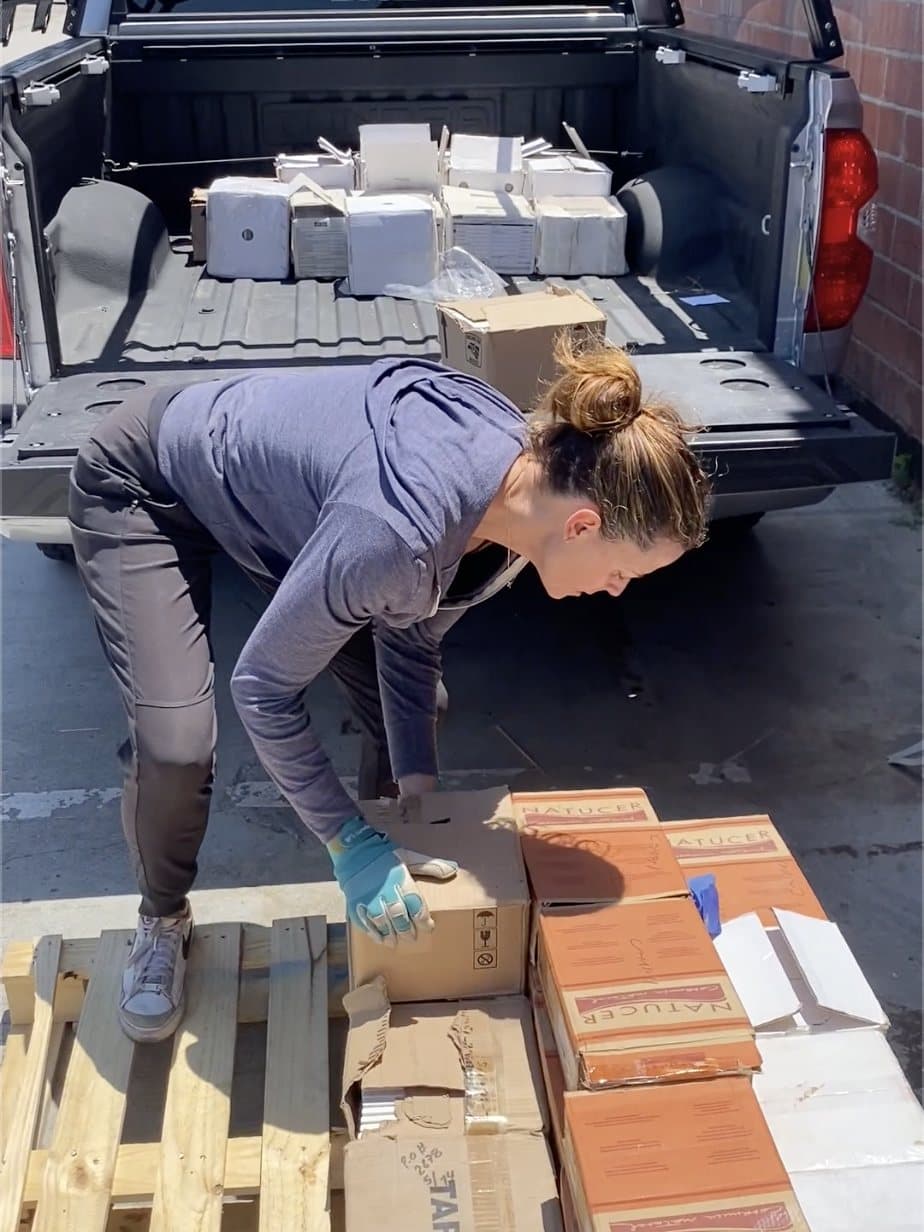
Keep it boxed
If tile is still in original boxes, keep it that way. Original packaging is proof of condition, makes shipping easier, and protects against damage. Even partially full boxes are better than loose tile.
Boxing loose tile
If you have loose tile (removed from boxes, leftover cuts, etc.), re-box it before listing:
- Use sturdy cardboard boxes sized for the tile
- Wrap individual tiles or small stacks in cardboard dividers
- Fill gaps with packing material to prevent shifting
- Label each box with contents and quantity
Palletizing for large quantities
If you have more than 500 sq ft or a full pallet, keep it palletized. Stack boxes on a standard pallet (48"x40"), wrap with stretch film, and strap if needed. Palletized tile is easier to ship via LTL freight and signals to buyers that you're a serious seller.
See Packing and Shipping → for how to build the pallet and what freight costs.
Step 4
Account for Trim and Accessories
The trim problem
Tile installations usually require trim pieces—bullnose, pencil liners, chair rail, corner pieces. If you're selling leftover field tile, your buyer will need matching trim. Trim is often harder to source than field tile and can make or break a sale.
If you have trim
Bundle it with the field tile. Matching trim significantly increases the value of your listing. List the trim types and quantities separately in your listing description.
If you don't have trim, note this in the listing. Buyers may still purchase if they can source trim separately or are doing a design that doesn't require it.
Step 5
Set Purchase Quantity Requirements
The simple rule
Don't let buyers cherry-pick small quantities from your inventory. If you have 200 sq ft, you don't want to sell 20 sq ft and be left with 180 sq ft that's harder to move as an odd lot.
Why this matters
Small partial sales fragment your inventory, increase your handling time, and make the remaining quantity less attractive. Each partial sale requires re-photographing, updating listings, and re-calculating shipping.
Setting smart limits for partial sales
If you're open to selling in portions:
- Set a minimum purchase of 50% of your total quantity
- Or set a minimum in square feet (e.g., "minimum 100 sq ft")
- Price partial purchases at a slight premium over the per-unit all-in price
When to say no
If you have under 200 sq ft, sell it as one lot. The hassle of splitting isn't worth it.
Step 6
Price Your Tile
Find the compare price
Look up the current retail price per square foot from an authorized dealer or the manufacturer's website. This is your baseline. It is also worth seeing what comparable tile is listed at on Unbuilt's tile collection. If the tile is discontinued, check what it last sold for—discontinued premium tile can actually hold value well if there's demand.
Apply condition discounts
| Condition | Discount from Retail |
|---|---|
| New in box, current production | 30-40% off |
| New in box, discontinued | 35-50% off |
| Open box, good condition | 40-50% off |
| Loose, unboxed | 50-60% off |
Factor in tile-specific variables
- Lot consistency: Single lot commands a premium. Mixed lots = deeper discount.
- Quantity: Larger quantities are more attractive. Price per sq ft can be lower because total value is higher.
- Trim included: Adds 10-20% to the listing value.
- Brand demand: Ann Sacks and Heath hold value better than most.
Price per square foot
Always list your price per square foot alongside the total price. Buyers compare on a per-unit basis. Example: "$8.50/sq ft — $1,700 for the full 200 sq ft lot (retails at $16/sq ft)."
Step 7
Create Your Listing
Essential information
Every tile listing should include:
- Brand, collection, color name
- Tile size and material
- Total quantity (sq ft and number of boxes/pieces)
- Lot number(s)
- Condition (new in box, open box, loose)
- Price (total and per sq ft)
- Location (city/state)
- Whether trim is included
- Minimum purchase quantity (if applicable)
Photos that sell
- Overall shot of the full inventory (pallets, stacked boxes)
- Close-up of the tile face (color, texture, finish)
- Box label showing brand, SKU, lot number
- Any damage or imperfections (builds trust)
- Measurement reference (ruler or tape against the tile)
What to say about shipping
Be upfront. State whether you offer shipping or local pickup only. If shipping, mention whether you can palletize for freight. If the buyer needs to arrange their own freight, say so. Transparency about logistics prevents wasted time for both parties.
Step 8
Where to List
- Unbuilt — Free marketplace built for construction materials. List for free
- Unbuilt Consignment — We handle everything (photography, listing, shipping). Starts at 18%. Learn more
- Facebook Marketplace — Good for local sales. High volume but lower buyer intent for specialty materials.
- Craigslist — Still works for local pickup. Tire kickers are common.
- eBay — Possible for small quantities of premium tile. Fees eat into margins.
Step 9
Packing and Shipping
Option 1: LTL Freight
For palletized tile or large quantities, LTL (Less Than Truckload) freight is the standard. Your tile shares truck space with other shipments.
Expect to pay $200-$500 for shipping a pallet within 500 miles. Costs increase with distance and weight. Residential delivery adds $50-$100.
How to palletize tile
- Use a standard 48"x40" pallet
- Stack boxes flat, not on edge
- Don't exceed 4 feet high (including pallet)
- Wrap tightly with stretch film (minimum 3 layers)
- Strap with at least 2 bands
- Label "FRAGILE - CERAMIC/STONE" on all sides
Option 2: Ground Parcel
For smaller quantities (under 70 lbs per box), UPS or FedEx Ground works. Pack each box inside a slightly larger shipping box with 2" of cushioning material on all sides. Double-box for extra protection. Tile is heavy and fragile—don't underpack.
Re-boxing for parcel shipping
If tile is loose, create tile "sandwiches": two pieces of cardboard with tiles between them, taped together. Stack sandwiches in a sturdy box with dividers between layers. The goal is zero tile-to-tile contact and no room to shift.
Quick Reference: Tile Resale Checklist
When to Just Donate
Some tile isn't worth the effort of selling. Consider donating if:
- Quantity is below minimum thresholds
- Tile is unidentifiable (no brand, no box)
- Retail value is under $5/sq ft
- You just want it gone quickly
Habitat for Humanity ReStore accepts tile donations and provides tax receipts.
More Guides
How to Resell Unused Windows →
New vs. installed value, brand tiers, measuring specs, storage, shipping
Pricing Calculator →
Framework for setting the right price based on condition, brand, and timeline
Questions?
Not sure whether your tile is worth listing? Send us the details and we'll give you an honest assessment.